

What it does
Ask is your conversational way into your data. You type a question in plain language, and Pluvo answers using your connected data and your Ontology, returning insights along with charts and tables right in the conversation. Because Ask works from your Ontology and computes against your real numbers, answers stay grounded in your data rather than being made up. You can keep the conversation going, asking follow-ups and drilling deeper, and Pluvo remembers the context as you go.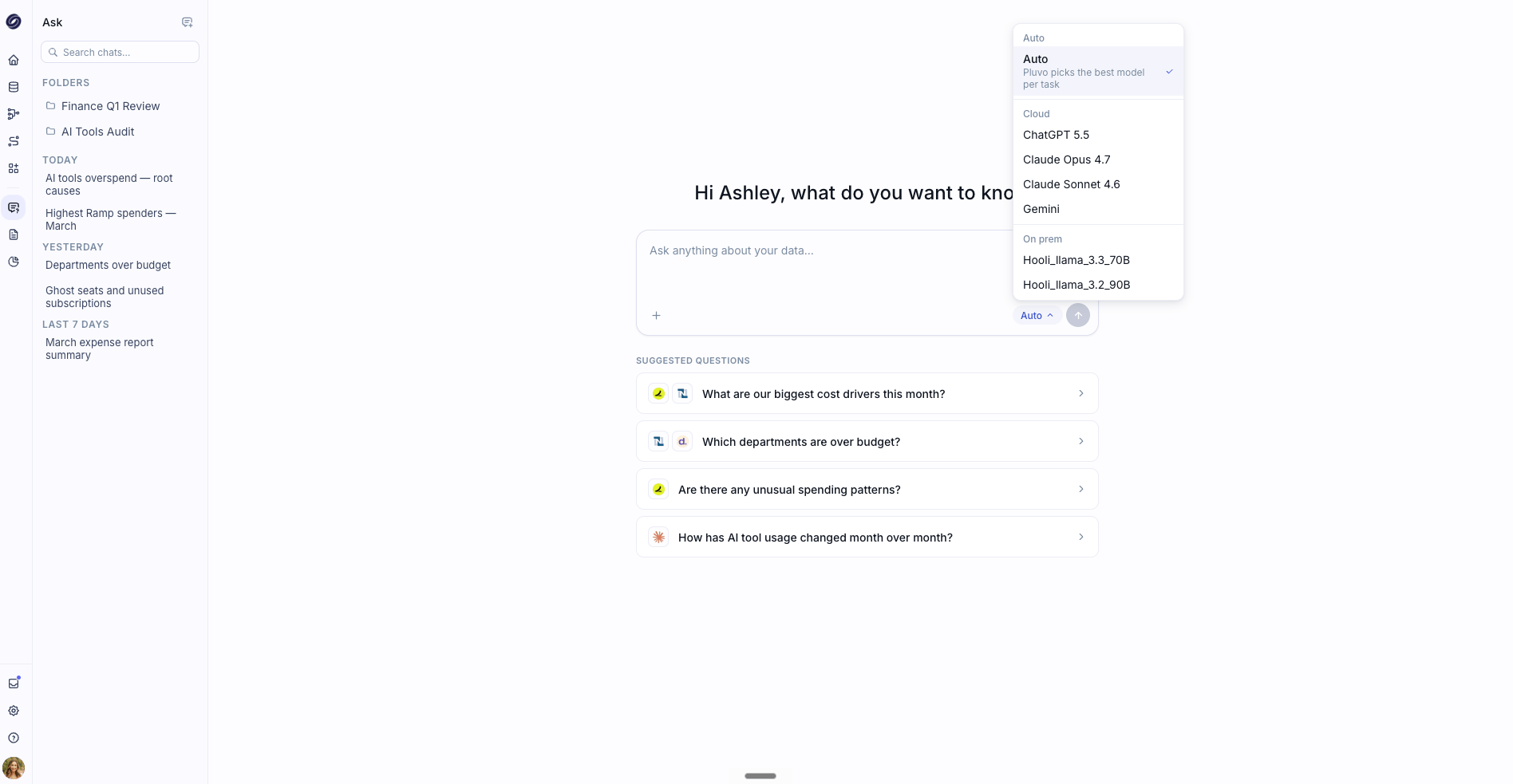
How to use it
Describe what you want to know
Type your question into the box, for example “Show revenue trends over the last 12 months” or “Why did expenses jump last quarter?”
Or start from a suggestion
Not sure where to begin? Pick one of the quick-start suggestions, such as Variance analysis, Anomaly detection, Cash runway analysis, or Revenue trends. Each one fills the box with a starting prompt you can edit before you send it.
Read the answer
Pluvo responds in the conversation with a written explanation and, where useful, charts and tables. You can follow the steps it took to reach the answer.
Ask vs. Analyze
Ask and Analyze both answer questions about your data, but they suit different moments:- Ask is fast and conversational. Use it for quick questions, exploring, and back-and-forth follow-ups.
- Analyze is structured and thorough. Use it when you want a full, planned investigation that produces a formal report.